
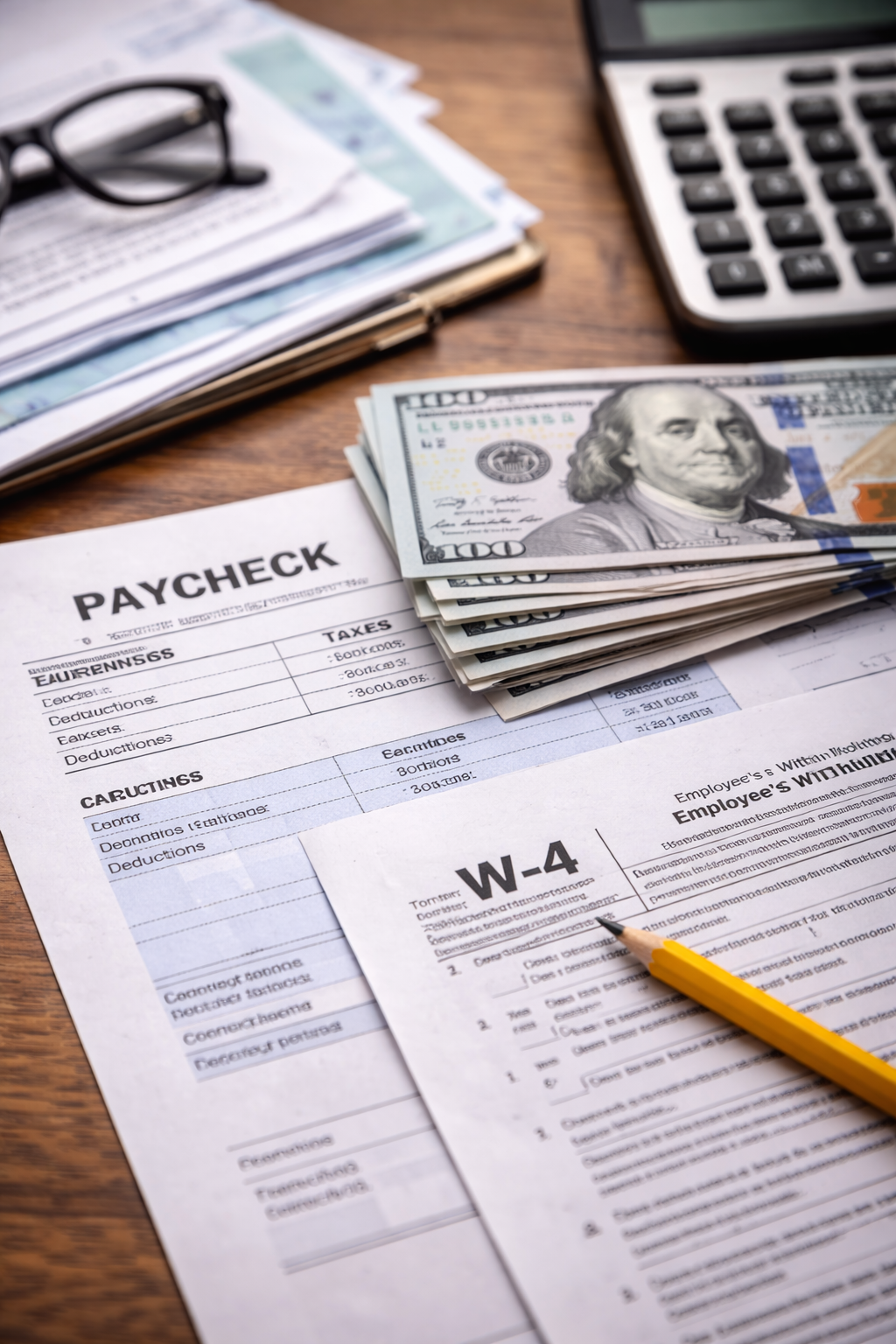
Tax withheld incorrectly from paycheck was not something I noticed right away. The deposit hit my account on a Friday morning, and at first glance it looked normal. But when I opened the paystub, the numbers didn’t line up. Federal withholding was higher than usual. State tax looked wrong. My take-home pay was short—and I couldn’t explain why.
I didn’t jump to conclusions. Payroll errors happen. But when tax withheld incorrectly from paycheck shows up more than once, it stops being a “glitch” and starts becoming a problem. If you’re here, you’re likely staring at a paystub wondering whether this is your fault, your employer’s fault, or something you’re supposed to fix yourself.
tax withheld incorrectly from paycheck is one of the most common payroll issues in the U.S., and also one of the most misunderstood. The good news is that most cases are fixable—if you act in the right order.
What makes this feel so confusing
When pay is missing, it’s obvious. When overtime isn’t paid, it’s clear. But taxes are different. They’re supposed to come out. So when tax withheld incorrectly from paycheck happens, many employees hesitate. They worry they misunderstood something, or that questioning it will make them look uninformed.
That hesitation costs time and money. Payroll systems don’t self-correct unless someone flags the issue.
Why taxes get withheld incorrectly
In real life, incorrect withholding usually comes from one of these system-level causes:
- Outdated or misentered W-4 information
- Payroll software applying the wrong tax table
- State or local tax applied to the wrong jurisdiction
- Bonus or supplemental pay taxed incorrectly
- Job change, promotion, or pay frequency change
- Multiple jobs not coordinated correctly
- Employer system error or manual override mistake
Most employees assume the IRS is involved. In reality, the error usually happens inside the employer’s payroll system.
The employer’s perspective (why they may miss it)
Payroll departments rely on automated systems. If the system receives bad input—wrong filing status, wrong state code, wrong supplemental rate—it produces bad output consistently.
From the company’s side, tax withheld incorrectly from paycheck often looks like “the system did what it was told.” That’s why vague complaints don’t work. You need to point to the exact inconsistency.
Your rights as an employee
You are not required to accept incorrect tax withholding just because it’s labeled “tax.” In the U.S., employees generally have the right to:
- Receive an accurate paystub showing correct withholding
- Request a payroll review for suspected errors
- Submit an updated W-4 at any time
- Ask for correction of payroll tax mistakes
- Recover over-withheld amounts through payroll correction or tax filing
Incorrect withholding is not “your fault” by default. But fixing it often starts with you.
First self-check (before contacting payroll)
Before sending emails or opening tickets, do this quick check:
- Compare this paystub to the last correct one
- Check filing status and dependents on your W-4
- Confirm state and local tax codes
- Identify whether this pay included bonus, commission, or retro pay
- Note exactly which tax line changed
If you can’t identify what changed, payroll will struggle to help you. Specific beats emotional every time.
How to raise the issue (what to say)
Use clear, neutral language:
“I believe tax was withheld incorrectly from my paycheck dated [date]. Compared to my prior paystub, federal/state withholding increased without a change in my W-4. I’m requesting a payroll review.”
This keeps the discussion factual and avoids blame.
Case branches
CASE A — W-4 entered incorrectly or not updated
What happened: payroll used outdated or wrong W-4 data.
What to do:
- Submit a corrected W-4 immediately.
- Ask payroll which pay periods were affected.
- Confirm whether a retro correction is possible.
Goal: stop the error going forward and fix past over-withholding if allowed.
CASE B — State or local tax applied incorrectly
What happened: wrong state, county, or city tax code.
What to do:
- Confirm your work location vs residence.
- Provide proof of address or worksite if needed.
- Ask payroll to correct jurisdiction codes.
Goal: remove incorrect local/state taxes.
CASE C — Bonus or supplemental pay taxed too aggressively
What happened: payroll applied flat supplemental rates.
What to do:
- Ask which tax method was used.
- Confirm whether aggregate method applies.
- Understand that some correction may happen only at tax filing.
Goal: know whether the issue is fixable now or later.
CASE D — Multiple jobs or pay changes
What happened: withholding increased due to combined income logic.
What to do:
- Review IRS multiple-job guidance.
- Adjust W-4 intentionally, not reactively.
- Avoid overcorrecting and under-withholding.
Goal: stabilize withholding across paychecks.
CASE E — Employer payroll system error
What happened: miscalculation or software issue.
What to do:
- Request a formal payroll audit.
- Ask for written confirmation of the fix.
- Track future paystubs closely.
Goal: document and resolve the systemic issue.
What not to do
- Don’t ignore it hoping it fixes itself.
- Don’t accuse payroll without evidence.
- Don’t submit random W-4 changes without understanding impact.
- Don’t assume the IRS will automatically fix it.
Most problems get worse when employees wait.
Internal help
If other paycheck deductions look unclear, this guide helps you identify unexplained withholdings.
If your paycheck amount looks wrong beyond taxes, this breakdown helps isolate hours vs deductions.
If corrections take too long or stall, this explains next escalation steps.
One official reference
This IRS page explains how withholding works and when adjustments are appropriate.
FAQ
Can over-withheld taxes be refunded?
Often yes—either through payroll correction or when you file your tax return.
Should I contact the IRS directly?
Usually no. Start with payroll unless the employer refuses to correct clear errors.
Is this illegal?
Not automatically. Many cases are mistakes, not violations.
How fast should this be fixed?
Ideally within one or two pay cycles after being flagged.
Key Takeaways
- Tax withheld incorrectly from paycheck is common and usually fixable.
- Most errors start in payroll systems, not the IRS.
- Clear documentation leads to faster correction.
- Waiting rarely improves the outcome.
The most frustrating part of tax withheld incorrectly from paycheck is not knowing whether you should push back. You should—calmly, clearly, and with facts.
Your next step is simple: compare paystubs, identify the change, and request a payroll review. That action—not silence—is what gets your pay back on track.